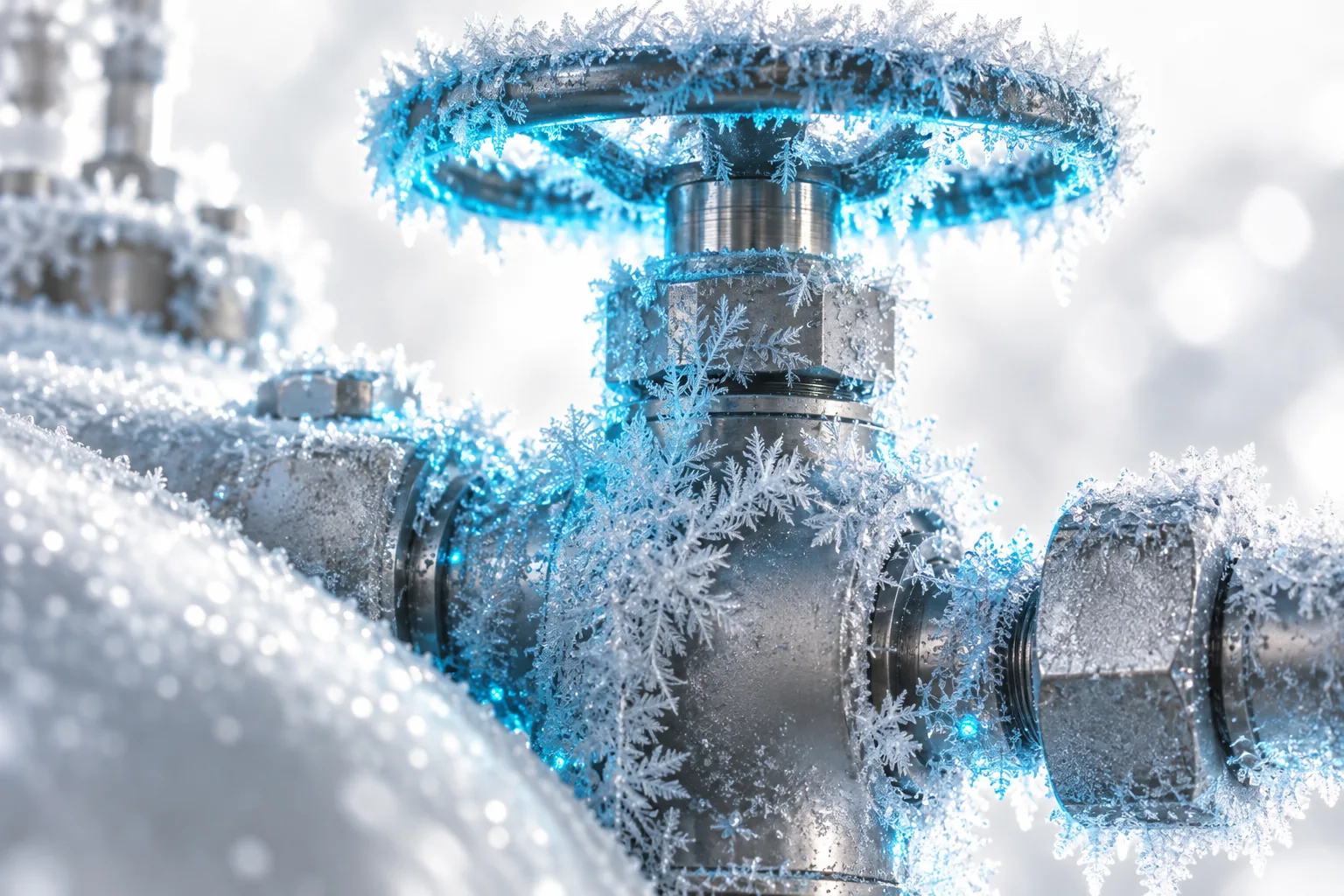
Frost on the fittings is a familiar sight on cryogenic equipment. But it tells you nothing about the main thing: how much product is left and how much has been lost.
Why the product evaporates
A cryogenic tank works like a thermos: an inner vessel, an outer shell and vacuum insulation between them. The insulation is very good but not perfect. Heat still gets inside, part of the liquid evaporates and the pressure in the tank rises.
When the pressure goes above the working level, the relief valve opens and vents gas into the atmosphere. This is normal tank operation, but the vented product will never be used.
When losses are higher
- the tank stands for a long time without withdrawal, for example over a weekend;
- the insulation gradually loses vacuum and the heat inflow grows;
- the tank is oversized, and the product is stored in it longer than it is consumed.
How it shows in the data
In the level history, losses look like a slow decline on days when no gas was drawn and a pressure rise before venting. Comparing these days with working days shows what share of the product goes to boil-off.
Losses you can see on a chart can be discussed with your supplier and taken into account when choosing a tank.
Telemetry does not cancel physics, but it makes it visible: instead of guesses you get numbers for every tank.