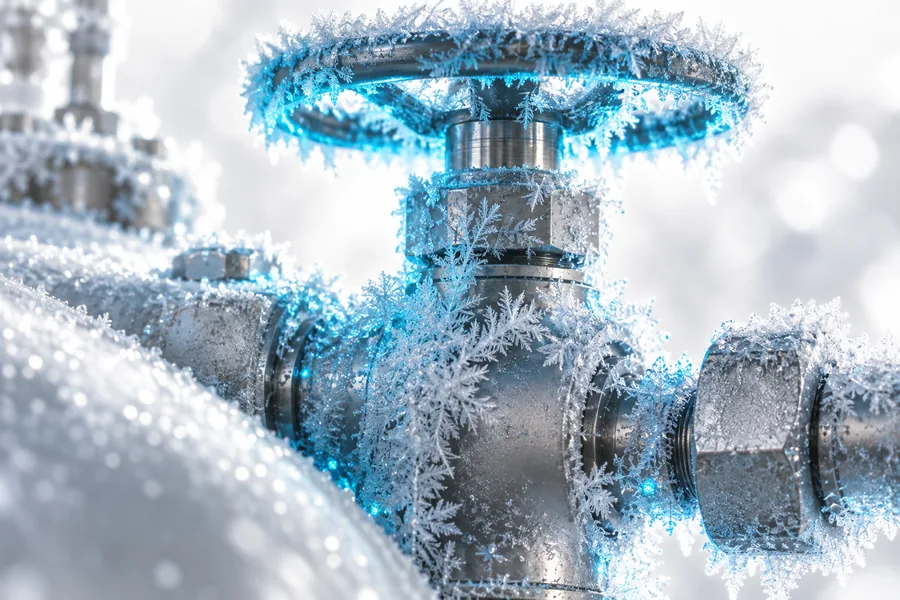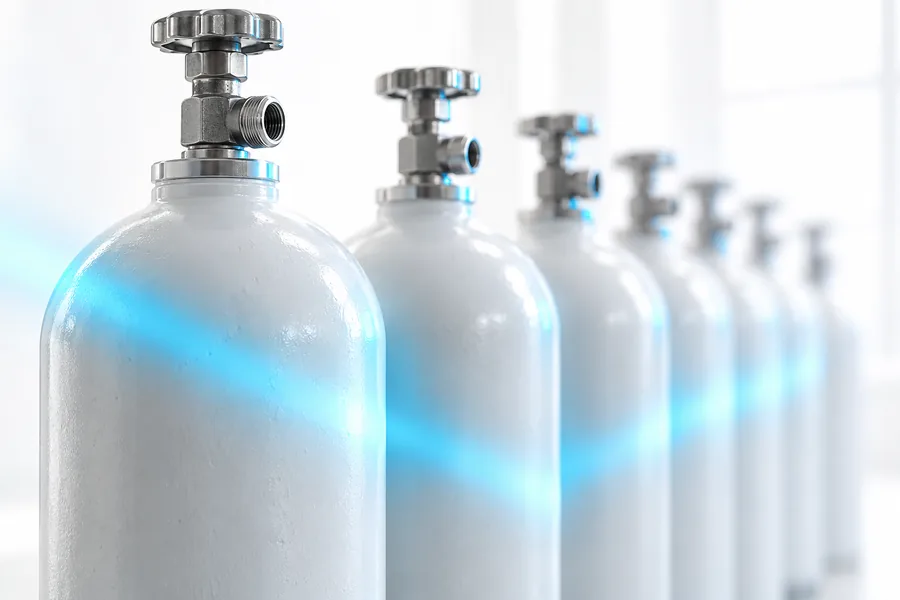
Liquid nitrogen, oxygen and argon are stored in cryogenic tanks at temperatures below −180 °C. One litre of liquid nitrogen turns into roughly 700 litres of gas, so even a small cryogenic cylinder replaces dozens of gas bottles. But such a tank has one peculiarity: people remember it when the product runs out and no refill has been ordered yet.
What the module measures
A telemetry module is installed on the tank and regularly records its state:
- level — how much product is left, in kilograms, litres or percent;
- pressure — whether the tank is operating normally;
- battery charge — so that the module itself does not switch off at the wrong moment.
Readings are sent to the platform over Wi-Fi and build up into a history. It shows not only the current level but also how the tank was used a week or a month ago.
Why estimating by eye does not work
Manual accounting relies on rounds: someone has to walk up to the tank, look at the level gauge and write down the value. Between rounds the tank lives its own life. Consumption depends on the shift and production load, and part of the product boils off even when nobody draws gas.
The main value of telemetry is not the number on the screen but the fact that you learn about a problem before it happens.
What changes with telemetry
When the level is always visible, refills are planned on actual consumption rather than just in case. A low-level notification arrives in the app or Telegram in advance, and the history shows where consumption grew and why.
For a consumer, this means fewer urgent orders and less downtime. For a supplier, it means a clear picture of all tanks at customer sites without trips just to check.